
Everyone wants more power over their lives.
But almost nobody defines it correctly.
They think power is:
- Money
- Status
- Influence
- Fame
- Attention
Those can be expressions of power.
But they are not the source.
Because you’ve seen people with all of those things who still look:
- Reactive
- Emotionally fragile
- Manipulated
- Lost
- Dependent
That is not power.
Real power is structural.
It’s the invisible architecture that determines whether you can shape reality or merely react to it.
And once you understand the components, you stop chasing symbols and start building the system.
Let’s break down the actual keys to power.
1. Internal Locus Of Control
This is the gateway.
Do you believe outcomes are influenced by your actions?
Or do you believe you are at the mercy of luck, people, or circumstance?
External locus produces:
- Excuses
- Blame
- Resentment
- Passivity
Internal locus produces:
- Experimentation
- Iteration
- Ownership
- Agency
Power begins the moment you view yourself as a player inside reality instead of a spectator watching it unfold.
2. Perception Control
Events do not determine experience.
Two people encounter the same situation:
One sees rejection.
The other sees filtration.
One sees delay.
The other sees positioning.
One sees failure.
The other sees feedback.
Perception control prevents psychological collapse during volatility.
If you control meaning, you maintain continuity of action.
That’s power.
3. Emotional Regulation
Emotional volatility is behavioral vulnerability.
If others can trigger:
- Anger
- Neediness
- Panic
- Validation seeking
They can steer your behavior.
Powerful people are not emotionless.
They are self-governing.
They experience emotion without surrendering decision authority to it.
Autonomy requires emotional containment.
4. Strategic Patience
Most people are urgency addicted.
They want immediate movement.
Immediate outcomes.
But power compounds through time.
Strategic patience allows you to:
- Wait for asymmetric setups
- Let compounding work
- Avoid forced decisions
- Operate beyond reactive cycles
Time horizon quietly signals status.
Short horizon = tactical survival
Long horizon = strategic power
5. Selective Attention
And like any resource, misallocation destroys output.
Powerful people decide:
- What deserves focus
- What deserves dismissal
- What problems are real
- What noise is irrelevant
Distraction is not harmless.
You can’t build power while mentally fragmented.
6. Accurate Reality Models
You can’t dominate terrain you misread.
Power correlates with map accuracy.
This includes understanding:
- Incentives
- Second-order effects
- Power structures
- Game dynamics
- Human behavior patterns
Most frustration is not bad luck.
It’s bad modeling.
When your model improves, outcomes begin to look predictable.
7. Leverage
Effort alone does not scale.
Leverage multiplies effort through:
- Capital
- Media
- Technology
- People
- Systems
One hour of leveraged action can outperform hundreds of hours of brute force.
This is why digital assets, automated funnels, and media distribution feel like force multipliers.
Because they are.
Power accumulates through multiplication.
8. Identity Authority
Many people outsource identity.
They wait for:
- Titles
- Recognition
- Permission
- Audience reaction
Powerful people define themselves internally.
Self-concept determines behavioral ceiling.
If you can’t see yourself operating at a level, you will unconsciously avoid behaviors required to reach it.
9. Boundary Enforcement
If you can’t say:
- No
- Not now
- That doesn’t work
- I’m unavailable
Others allocate your time.
Others drain your energy.
Others define your priorities.
Boundaries create structural authority.
Lack of boundaries creates silent submission.
10. Incentive Literacy
Behavior becomes predictable when you understand incentives.
Instead of asking what people say, powerful observers ask:
- What do they gain?
- What do they protect?
- What do they avoid?
- What is their payoff?
This dissolves naivety.
It converts confusion into pattern recognition.
11. Social Calibration
Power is also defensive.
It requires the ability to read people.
To detect:
- Alignment
- Opportunism
- Hidden hostility
- Authenticity
- Status dynamics
Many people achieve surface success but fail socially because they can’t interpret behavior accurately.
Power includes perception of people.
12. Narrative Construction
People operate through stories.
Powerful actors shape narrative at two levels:
- Internal narrative
- External narrative
Internally, narrative creates continuity and meaning.
Externally, narrative influences perception and belief.
Narrative is invisible infrastructure.
It governs identity, motivation, and influence simultaneously.
Your personal narrative MUST serve you.
13. Constraint Transmutation
Low-agency mindset views constraints as blocks.
High-agency mindset views constraints as design inputs.
No money can produce creativity.
Small audience can produce intimacy.
Limited time can produce prioritization.
Constraints often shape advantage.
Power converts friction into form.
14. Energy Management
Agency requires energy.
Low energy produces:
- Avoidance
- Short-term thinking
- Emotional fragility
- Cognitive fatigue
Energy is not just physical.
It includes mental clarity and emotional reserves.
Powerful people protect energy because energy sustains agency.
15. Environment Design
Behavior is context sensitive.
Powerful people design environments that make desired behavior easier.
This includes:
- Physical spaces
- Digital inputs
- Peer groups
- Information diet
Environment silently programs behavior.
Self-control is weaker than environment control.
16. Optionality Creation
Power equals viable choices.
Optionality reduces desperation.
It prevents capture.
It allows strategic movement.
- Money
- Skills
- Connections
- Reputation
- And assets
all create options.
Optionality is freedom in functional form.
17. Fast Feedback Loops
Powerful people do not wait for perfect information.
- They act.
- Observe.
- Adjust.
- Iterate.
Indecision compounds opportunity cost.
But stubborn persistence without feedback compounds failure.
Power sits in rapid learning cycles.
18. Self-Honesty
Self-deception blocks growth.
Power requires the ability to see:
- Weakness
- Blind spots
- Emotional motives
- Skill deficits
Without defensive distortion.
You can’t upgrade what you can’t acknowledge.
19. Outcome Detachment
Attachment produces behavioral distortion.
- Overpursuit
- Overreaction
- Poor negotiation posture
Detachment restores freedom of movement.
You act from preference rather than desperation.
Paradoxically, this increases effectiveness.
20. Mythic Self-Concept
At the highest layer, power includes symbolic coherence.
A sense that:
- Your life has narrative weight
- You are playing a role
- Your actions fit an archetype
This produces persistence during uncertainty.
Not delusion.
But meaning density.
And meaning sustains action across long horizons.
The Real Structure Of Power
Power is not a single trait.
It’s a stack.
A system.
Each component reinforces the others.
Internal locus without emotional regulation collapses under pressure.
Leverage without incentive literacy creates vulnerability.
Identity without accurate models produces delusion.
But when the stack is integrated, outcomes begin to feel less random.
Less chaotic.
More navigable.
That is the experiential shift of power.
Authorship over trajectory.
If You Want To Build Real Power
Start simple.
Ask yourself:
- Where do I outsource control?
- Where do I leak attention?
- Where do I tolerate boundary violations?
- Where are my models naive?
- Where am I operating without leverage?
These questions reveal structural gaps.
And closing structural gaps is how power compounds.
Quietly.
Predictably.
Inevitably.
Want access to more powerful insights?
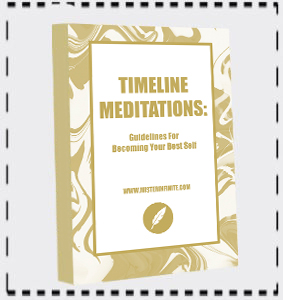
Read “Timeline Meditations“.
It’s a collection of golden maxims designed to help you grow.
Enjoy.
-M.I.
You May Also Like:
Depth: The Secret To Transforming your Life
"What Is The Life Force 8?"
Time To Seize The Unlimited Opportunities Within The Mirror Of Life
How To Overcome Toxic Shame - Get Rid Of Your Negative Self-Image Once And For All
Why 99% of People Stay Average: The Brutal Truth About Practice vs. Theory
10 Surprising Reasons People Lose Respect for You: Avoid These Common Pitfalls
Unlock the Hidden Power of Internal Alignment - Grasp This Feeling and Watch Your Dream Life Become ...
What To Do When Your Growth Has You Losing Friends

My name is Mister Infinite. I've written 701+ articles for people who want more out of life. Within this website you will find the motivation and action steps to live a higher quality lifestyle.
