Most people make decisions from fleeting emotions.
The best performers think more like chess players.
They don’t just ask:
“What happens next?”
They ask:
“What happens after that?”
And then:
“What happens after that?”
This is the difference between first-order thinking and multi-order thinking.
It’s one of the most valuable mental models you can develop.
Because:
- Life isn’t linear.
- Business isn’t linear.
- Money isn’t linear.
Everything creates ripple effects.
A single decision can trigger a chain reaction that unfolds for years.
The people who consistently make better decisions aren’t necessarily smarter.
They simply see further.
They understand consequences beyond the obvious.
And that gives them a massive advantage.
The ability to think through second-order and third-order effects can dramatically improve:
- Decision-making
- Strategic planning
- Business growth
- Long-term success
The Concept of Multi-Order Consequences
Every decision creates layers of consequences.
Some are obvious.
Others remain hidden until much later.
Understanding these layers is the foundation of strategic thinking.
First-order consequences are the immediate effects of an action.
They’re usually easy to spot.
Easy to predict.
And easy to understand.
Second-order consequences are what happen because of the first-order consequences.
These effects are often less visible.
Sometimes they’re completely unexpected.
Third-order consequences and beyond are the ripple effects created by the second-order outcomes.
As you move further down the chain, complexity increases.
Prediction becomes harder.
Yet this is where many of the biggest opportunities and risks live.
Most people stop at first-order thinking.
Strategic thinkers keep following the chain.
The Importance of Multi-Order Thinking
The quality of your life is often determined by the quality of your decisions.
And the quality of your decisions depends on how far ahead you can see.
1. Avoiding Unintended Consequences:
Many bad decisions look smart in the short term.
That’s what makes them dangerous.
A company may lay off employees to reduce costs.
The first-order consequence is improved profitability.
Great.
But then:
- Morale drops.
- Productivity declines.
- Key talent leaves.
- Culture deteriorates.
Eventually performance suffers.
What looked like a smart move creates problems later.
Many mistakes happen because people optimize for the first outcome while ignoring everything that follows.
2. Enhancing Strategy:
Good strategy is not about reacting.
It’s about anticipating.
The strongest leaders think several moves ahead.
They understand how today’s decisions shape tomorrow’s opportunities.
By considering second-order and third-order consequences, they can identify:
- Hidden risks
- Hidden advantages
- Future bottlenecks
- Emerging opportunities
This creates stronger and more resilient strategies.
3. Sustainability and Long-Term Success:
Many things produce short-term gains.
Far fewer produce long-term success.
- A crash diet can create fast weight loss.
- Aggressive discounts can create quick sales.
- Excessive work hours can boost short-term output.
But what happens next?
The second-order and third-order effects often tell a very different story.
Long-term success requires understanding how today’s actions compound over time.
Examples of Multi-Order Consequences
Product Launches:
Imagine a company launching a new product.
The first-order goal is simple:
Capture market share.
If customers respond well, sales increase.
Revenue grows.
That’s the second-order consequence.
But then new challenges appear.
- Customer support tickets increase.
- Supply chains become strained.
- Fulfillment becomes more complex.
If the company fails to prepare for these consequences, growth can create operational problems and unhappy customers.
Success itself can create new problems.
Pricing Strategies:
A company decides to lower prices.
The first-order consequence is more customers.
The second-order consequence may be higher revenue.
Everything looks great.
Until the third-order consequences appear.
- Profit margins shrink.
- Cash flow tightens.
- Investment in innovation slows.
Product quality may suffer.
What initially looked like a growth strategy can eventually weaken the business.
Strategies for Mastering Multi-Order Thinking
Like any skill, multi-order thinking can be developed.
Here are several ways to strengthen it.
1. Systems Thinking:
Nothing exists in isolation.
Everything affects something else.
Systems thinking helps you understand how different parts of a system interact.
Instead of viewing decisions individually, you learn to see the bigger picture.
A business leader doesn’t just ask:
“How does this affect marketing?”
They ask:
“How does this affect sales, customer service, fulfillment, retention, culture, and profitability?”
The more connections you see, the better your predictions become.
2. First Principles Thinking:
Many people think through analogy.
They copy what others are doing.
First principles thinking works differently.
It breaks problems down into their most fundamental truths.
Then rebuilds from there.
This helps remove assumptions.
It eliminates inherited beliefs.
And it reveals the actual cause-and-effect relationships driving outcomes.
When you understand the core mechanics of a situation, predicting second-order and third-order consequences becomes much easier.
This is one reason first principles thinking is so powerful.
It functions as a shortcut through complexity.
3. Scenario Planning:
One useful exercise is asking:
“What happens if this works?”
Then asking:
“What happens if it doesn’t?”
And finally:
“What happens after that?”
Scenario planning creates decision trees that explore multiple possible futures.
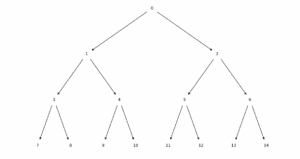
This allows you to prepare for different outcomes instead of becoming dependent on a single prediction.
The goal isn’t perfect forecasting.
The goal is reducing surprises.
4. Critical Thinking:
Critical thinking helps you challenge assumptions.
It forces you to examine ideas more carefully.
Instead of accepting a claim at face value, you explore alternative explanations.
You consider different viewpoints.
This process often reveals consequences that would otherwise remain hidden.
5. Feedback Loops:
Reality is the ultimate teacher.
Feedback loops help you learn from it faster.
Every decision produces information.
Pay attention to the results.
Observe what happens.
Study the consequences.
Then adjust accordingly.
The more feedback you collect, the better your ability to predict future outcomes becomes.
6. Collaboration With Other Perspectives:
No one sees everything.
Every person has blind spots.
This is why trusted:
- Advisors
- Partners
- Mentors
- And team members
can be valuable.
Different perspectives reveal risks and opportunities you may overlook.
Sometimes a single conversation can expose an entire chain of consequences you never considered.
Progressive Mastery: A Lesson from Chess
Learning multi-order thinking is similar to learning chess.
Beginners often focus on the next move.
Experienced players focus on the next several moves.
But nobody starts there.
Chess players first learn simple endgames.
The board contains fewer pieces.
The environment is less complex.
This allows them to understand the fundamentals.
Then they move on to:
- More complex endgames
- Midgames
- Openings
Over time they develop the ability to see further ahead.
The same process applies to strategic thinking.
Start with First-Order Consequences (Simple Endgames):
Focus on immediate outcomes.
Learn to clearly identify the direct results of your actions.
Move to Second-Order Consequences (Complex Endgames):
Begin exploring what happens because of those immediate outcomes.
Look for:
- Hidden effects.
- Unexpected reactions.
- New constraints.
Master Third-Order Consequences (Midgames and Openings):
Eventually you’ll begin seeing longer chains of cause and effect.
You’ll understand how today’s decisions shape tomorrow’s realities.
This is where strategic leverage starts to emerge.
Just like chess, mastery develops progressively.
You don’t begin by seeing ten moves ahead.
You build that ability over time.
Challenges and Pitfalls
Multi-order thinking is powerful.
But it isn’t easy.
Several obstacles can get in the way.
Complexity and Uncertainty:
The further you project into the future, the more uncertainty appears.
Second-order consequences are harder to predict than first-order consequences.
Third-order consequences are harder still.
Reality contains too many variables for perfect prediction.
The goal is not certainty.
The goal is better probabilities.
Cognitive Biases:
Humans naturally prefer immediate rewards.
This creates blind spots.
People often choose short-term comfort over long-term benefit.
Or short-term gain over long-term sustainability.
Overcoming these biases requires awareness and discipline.
Resource Constraints:
Carefully analyzing consequences takes time.
And time is limited.
Fast-moving environments often force quick decisions.
This creates tension between speed and analysis.
One reason first principles thinking is so valuable is because it helps simplify complexity and accelerate decision-making.
Conclusion
The biggest difference between average thinkers and strategic thinkers is often time horizon.
Average thinkers focus on what happens next.
Strategic thinkers focus on what happens after that.
And after that.
Mastering multi-order consequences allows you to make better decisions by understanding the ripple effects your actions create.
It helps you:
- Avoid hidden traps.
- Identify hidden opportunities.
- And build more durable success.
This requires a commitment to:
- Systems thinking
- First principles thinking
- Scenario planning
- Critical thinking
- Collaboration
No one can perfectly predict the future.
But you can dramatically improve your odds by looking beyond immediate outcomes.
The world is becoming increasingly interconnected.
Actions create larger ripple effects than ever before.
The people who understand those ripple effects will consistently make better decisions.
And over time, better decisions compound into extraordinary results.
You May Also Like:
33 Psychological Triggers That Make People Buy
Inside: The Biggest Challenge In Online Business (And How To Master It)
The 1% Reality: Why Most People Scroll and Almost No One Builds Anything
Why Ancient Emperors Would Be Jealous Of Your Laptop
The War You Can’t See: How Your Mind Is Under Attack Every Day
How To Detox Your Association Of Ideas
Here's How To Create A Unique Selling Proposition For Your Brand (And Why It Matters)
A Guide to Smarter Decision-Making: Understanding and Applying Positive Expected Value (EV+) Moves

My name is Mister Infinite. I've written 778+ articles for people who want more out of life. Within this website you will find the motivation and action steps to live a higher quality lifestyle.
