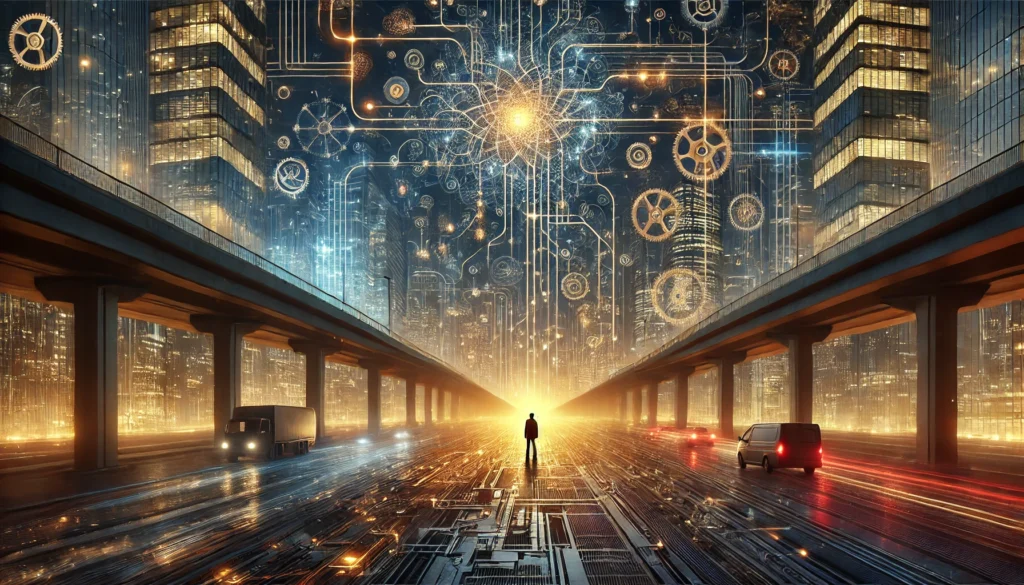
Life runs on invisible infrastructure.
That sounds strange at first.
When people hear the word infrastructure they think:
- Roads.
- Bridges.
- Power lines.
- Water pipes.
- Internet cables buried under oceans.
Boring things.
Things nobody posts about.
Nobody wakes up excited thinking:
“Man, I’m grateful sewage systems still work today.”
But the moment infrastructure fails?
Now everybody notices.
- No water.
- No electricity.
- Bridge collapse.
- Traffic everywhere.
Suddenly the invisible becomes impossible to ignore.
Your internal world works the same way.
- Frame is infrastructure.
- Mindset is infrastructure.
- Habits are infrastructure.
- Reputation is infrastructure.
- Principles are infrastructure.
- Mental models are infrastructure.
- Personal narrative is infrastructure.
- Even your relationship with time is infrastructure.
Most of what runs your life is hidden beneath the surface.
And that creates a strange problem:
You can be controlled by systems you didn’t consciously build.
You think you’re making decisions.
But many times you’re simply moving along roads built years ago.
Roads you forgot existed.
Roads somebody else handed to you.
You Don’t Notice Internal Infrastructure Until Something Breaks
You don’t notice beliefs when they support your life.
You notice them when they become walls.
You don’t notice your personal narrative when it works.
You notice it when you say:
“I don’t know why I keep doing this.”
Or:
“I don’t know why I can’t move forward.”
Or:
“This keeps happening to me.”
People often think outcomes appear randomly.
They think:
- Bad luck.
- Wrong timing.
- Wrong people.
- Wrong circumstances.
Sometimes that’s true.
But often the explanation is simpler:
Your invisible infrastructure routed you there.
A person who unconsciously believes:
“I’m not leadership material”
will route around leadership opportunities.
A person who believes:
may sabotage wealth without realizing it.
A person who thinks:
“People always leave”
may create the exact behaviors that push people away.
The system underneath creates the outcomes above.
Yet most people only stare at the outcomes.
That’s like seeing traffic and never asking what roads produced it.
Infrastructure Gets Built Once And Runs Constantly
Cities run on systems built decades ago.
- Some roads were planned before you were born.
- Some train lines outlived governments.
- Some cities still follow maps created hundreds of years earlier.
Your psychology works similarly.
A belief formed at 14 can still shape choices at 40+.
One embarrassing moment in school can become a permanent story.
- One rejection.
- One humiliation.
- One betrayal.
- One sentence.
Suddenly infrastructure gets installed.
“People can’t be trusted.”
“I’m awkward.”
“Success creates problems.”
“I’m not the kind of person who does that.”
The dangerous part?
You stop seeing them as beliefs.
Now they feel like reality.
Reality says:
“This is just who I am.”
Infrastructure says:
“This is how I learned to operate.”
Huge difference.
Because identity feels permanent.
Infrastructure can be rebuilt.
Linguistic Infrastructure: Words Build Reality
People underestimate this.
They think words simply describe reality.
Often they create it.
If you don’t have words for something, your experience stays:
- Blurry.
- Foggy.
- Undefined.
You feel something.
But you can’t grab it.
Then suddenly you discover a concept.
- Confirmation bias.
- Status games.
- Projection.
- Future pacing.
Now the fog becomes visible.
You can see what was previously invisible.
Language gives shape to perception.
Cultures with different words often navigate:
- Different realities.
- Different conceptual maps.
- Different psychological terrain.
People think thought creates language.
But language also creates thought.
Words are roads consciousness travels through.
Attentional Infrastructure: You See What You’ve Trained Yourself To See
Two people enter the same room.
- One sees opportunity. One sees threats.
- One notices attractive people. One notices status.
- One notices exits. One notices judgment.
Same room.
Different worlds.
Why?
Infrastructure.
Your perception has been trained.
- Quietly.
- Repeatedly.
- Over years.
- Without permission.
- Without awareness.
Your mind built filters.
And now those filters decide what enters awareness.
- Some people are unconsciously trained to notice danger.
- Others are trained to notice beauty.
- Others notice possibility.
Perception is not objective.
Perception is conditioned.
You spent decades training your attention.
The problem is most people never trained it intentionally.
Temporal Infrastructure: Your Relationship With Time Quietly Runs Everything
This one hides everywhere.
How do you value it?
Do you think in:
- Hours?
- Weeks?
- Years?
- Decades?
Some people constantly experience time scarcity.
- Everything feels urgent.
- Everything feels late.
- Everything feels like panic.
Others operate differently.
- Planting.
- Waiting.
- Accumulation.
Most powerful things require long timelines.
- Relationships.
- Reputation.
- Businesses.
- Skills.
- Fitness.
- Trust.
- Identity.
A person with a two-week horizon lives differently than a person with a ten-year horizon.
- One optimizes for immediate relief. One optimizes for architecture.
- One chases dopamine. One builds systems.
The future you experience tomorrow often depends on the future you can emotionally feel today.
Frame Infrastructure: The Operating System Behind Your Actions
What you see depends on what you’re looking through.
- A window directs attention.
- A lens shapes what’s visible.
- A border defines what’s inside and what doesn’t exist.
But frame goes further.
Frame doesn’t just shape perception.
It determines how you move through reality itself.
Because you don’t simply observe life.
You participate in it.
And participation runs through a frame.
Every interaction arrives pre-structured.
- How you interpret disrespect.
- How you respond to pressure.
- How much you tolerate.
- How much you ask for.
- How quickly you move.
- How much space you take up.
- How much authority / power you unconsciously give away.
The frame quietly decides.
Most people never question it.
They think:
“This is just my personality.”
“This is just who I am.”
“This is just how life works.”
But often they’re running infrastructure.
- Old rules.
- Old agreements.
- Old code.
Installed years ago.
- Parents wrote parts.
- School wrote parts.
- Fear wrote parts.
- Pain wrote parts.
- Culture added updates.
Now the operating system runs automatically.
- Someone challenges them and they shrink.
- Opportunity appears and they hesitate.
- Conflict arrives and they avoid it.
Not because they consciously decided.
Because infrastructure routed them there.
Frame decides:
- What counts as risk.
- What counts as possible.
- What counts as acceptable.
- What behavior feels natural.
- What behavior feels impossible.
Two people can walk into identical situations and move completely differently.
- One folds. One advances.
- One apologizes for existing. One acts like reality has room for them.
Same world.
Different code.
Different infrastructure.
People think they interact with reality directly.
Usually they interact with reality through architecture they forgot they built.
And if you never inspect the frame…
You spend years trying to change your life while unconsciously obeying rules you never consciously chose.
Relational Infrastructure: Invisible Rules Hold Everything Together
- Trust is infrastructure.
- Reputation is infrastructure.
- Friendship is infrastructure.
Nobody notices these things when they work.
- You assume someone will answer.
- You assume support exists.
- You assume loyalty remains.
Then one day you need help.
- No answer.
- No support.
- No trust.
Now you realize there was no infrastructure at all.
Relationships have invisible rules.
- Deposits.
- Signals.
- Consistency.
- Reliability.
Years of tiny interactions build massive structures.
People think relationships collapse suddenly.
Often collapse happened years earlier.
The visible event was merely the final crack.
Somatic Infrastructure: The Body Is Running More Than You Think
People separate body and mind.
Reality doesn’t.
- Posture changes thinking.
- Breathing changes emotion.
- Tension changes decisions.
- Energy changes perception.
The body feeds information back into consciousness constantly.
Someone carrying years of tension may think they have an anxiety problem.
Maybe they partly have a physiological infrastructure problem.
- Shoulders tight.
- Jaw locked.
- Breathing shallow.
- Sleep destroyed.
- Nervous system overloaded.
Most people have never audited any of it.
They upgrade:
- Phones.
- Cars.Apps.
- Computers.
But ignore the biological hardware running consciousness itself.
Social Infrastructure: Access Is A Hidden Currency
- Who would answer your call?
- Who would introduce you to opportunities?
- Who trusts you?
- Who would stake their reputation on you?
That matters.
People often think life is purely individual.
It isn’t.
Social infrastructure exists.
- Networks.
- Trust chains.
- Access.
- Introductions.
- Off-menu opportunities.
- Invisible doors.
People call parts of this privilege.
And some of it is.
Sometimes infrastructure was built before you arrived.
Some people inherit access.
Others build it from scratch.
But everyone operates inside social systems.
Nobody becomes successful entirely alone.
Aesthetic Infrastructure Quietly Filters Reality
- What feels elegant to you?
- What feels ugly?
- What feels inspiring?
- What feels cheap?
Your sense of taste quietly shapes your life.
- You choose environments through aesthetics.
- You choose ideas through aesthetics.
- You choose goals through aesthetics.
- You choose identities through aesthetics.
Most creative decisions happen below conscious awareness.
People think they are choosing.
Often their aesthetic infrastructure already chose.
Chronological Infrastructure: You Are Running Historical Software
The era you were born into shaped you.
Massively.
People think their assumptions are objective.
Many assumptions are simply historical defaults.
People born during scarcity think differently than people born during abundance.
People raised during the internet era think differently than previous generations.
Every period carries:
- Invisible beliefs.
- Invisible norms.
- Invisible assumptions.
People mistake shared assumptions for truth.
But often they’re just historical weather.
Software updates humanity installed recently.
Infrastructure Is Expensive To Retrofit
This is where it becomes brutal.
Cities hate replacing infrastructure.
Why?
Because replacing foundations is expensive.
- Messy.
- Disruptive.
- Painful.
People are similar.
- You don’t casually replace a worldview.
- You don’t casually replace identity.
- You don’t casually replace old stories.
People delay until crisis arrives.
- Health collapse.
- Relationship collapse.
- Meaning collapse.
- Money collapse.
Then suddenly the work becomes unavoidable.
People often call this awakening.
But many awakenings begin as infrastructure failure.
The old roads stop functioning.
Now you finally notice they existed.
Audit The Invisible
Most people attack symptoms.
Very few inspect foundations.
- They yell at outcomes.
- They chase motivation.
- They chase hacks.
But the hidden systems underneath remain untouched.
Ask harder questions:
- What beliefs route my decisions?
- What stories am I unconsciously obeying?
- What assumptions do I treat like reality?
- What emotional patterns have become infrastructure?
- What parts of my life were inherited rather than chosen?
Because most of what runs you isn’t what you think runs you.
And infrastructure remains invisible until it fails.
The goal is noticing it before collapse forces the audit.
Because once you see the roads underneath your life…
You stop blaming traffic.
And start redesigning the city.
Want to learn more?
Read “Timeline Meditations“.
It’s a collection of golden maxims designed to help you grow.
Enjoy.
-M.I.
You May Also Like:
How to Gain Unshakable Conviction in Contrarian Plays
The Universal Energy Flowing Through You: Shaping Your Reality and Being 24/7
The Transformative Power of Skills: Building the Bridge to Your Wildest Dreams
The Art of Rolling Solo: Mastering the Power of Independence
Money Trees: Build a Life That Pays You Back
Why I Run A Lifestyle Business
The Tempo Of Reality: Upgrade Your Rhythm, Upgrade Your Life
The War You Can’t See: How Your Mind Is Under Attack Every Day

My name is Mister Infinite. I've written 778+ articles for people who want more out of life. Within this website you will find the motivation and action steps to live a higher quality lifestyle.
