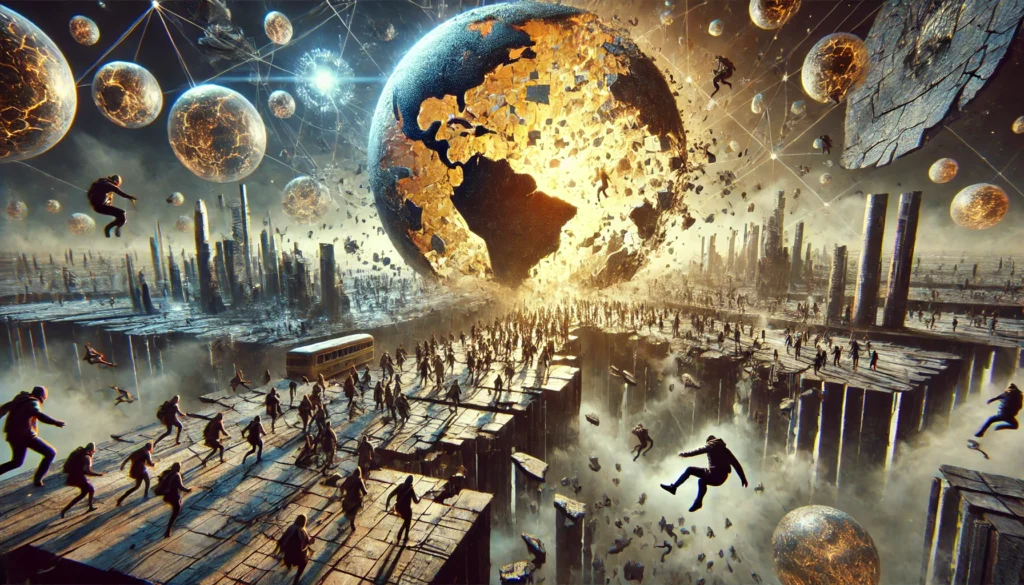
Most people think price equals value.
It doesn’t.
Price is often a story.
A collective hallucination.
A temporary agreement between millions of minds.
People look at:
- A stock
- A neighborhood
- A business
- A skill
- A market
- A person
- Or even themselves
and assume the price tells them something objective.
“This costs a lot, therefore it’s valuable.”
“This is cheap, therefore nobody wants it.”
“This is popular, therefore it’s good.”
But prices are not truth.
Prices are signals distorted through human psychology.
And once you understand this, you start seeing opportunities hiding everywhere.
Because reality doesn’t move only through facts.
Reality moves through perception.
And perception is messy.
People get emotional.
- They become fearful.
- They chase narratives.
- They copy crowds.
- They anchor themselves to old assumptions.
And all of that creates distortions.
Those distortions create opportunities.
The people who consistently win are often better distortion hunters.
Table of Contents
ToggleMarkets Don’t Price Reality
They Price Stories
Think about bubbles.
- The internet boom.
- Housing manias.
- Crypto explosions.
People were not buying pure utility.
They were buying belief.
- Stories spread.
- Excitement spread.
- Fear of missing out spread.
Narratives became stronger than fundamentals.
Price moved because collective psychology moved.
Then eventually reality showed up.
The story broke.
Price corrected.
This happens far beyond financial markets.
People do this with:
- Careers.
- Industries.
- Cities.
- Ideas.
- Relationships.
- Even identities.
A certain job becomes “safe.”
A certain path becomes “prestigious.”
A certain city becomes “the place to be.”
People rush in.
Crowds reinforce the belief.
Then eventually conditions change.
But people keep operating from yesterday’s map.
Because changing a belief system hurts.
People become attached to narratives.
Especially narratives that once worked.
And that’s where opportunity often begins.
The Biggest Moves Happen When The Rules Change
Most people study the game.
Few people study changes to the game.
That difference matters.
Because when rules shift, old assumptions stop working.
- Entire maps become obsolete.
- Entire industries get rebuilt.
- New advantages appear.
Think about what happens every time tech changes infrastructure.
- The internet changed distribution.
- Social media changed attention.
- AI changed leverage.
- Mobile phones changed communication.
- Platforms changed publishing.
The game changed.
But many people kept playing by old rules.
They optimized for systems that no longer existed.
And whenever that happens, chaos appears.
Chaos creates pricing errors.
Because nobody knows what something is worth yet.
- Nobody has enough certainty.
- Nobody has enough historical data.
- Nobody knows the true winners.
And uncertainty creates unstable regions.
Fortune Often Lives Inside Unstable Regions
Most people avoid instability.
They want certainty.
- Clear rules.
- Safe paths.
- Predictable outcomes.
But unstable regions are often where massive upside lives.
Because instability means people are confused.
And confusion creates distortion.
When maps break, opportunities appear.
- The early internet looked unstable.
- Social media looked unstable.
- Crypto looked unstable.
- AI looked unstable.
Entire cities can become unstable.
Entire industries can become unstable.
Even social dynamics become unstable.
The average person sees uncertainty and freezes.
But uncertainty itself is not danger.
Sometimes uncertainty simply means:
“The market has not figured this out yet.”
Those are very different things.
Unstable regions create room for movement.
And movement creates asymmetry.
Most People Arrive After The Story Feels Safe
By the time everyone agrees, the largest upside often already happened.
People like social proof.
- They wait.
- Then wait again.
- Then wait for more certainty.
Then eventually enter after everyone else already moved.
We evolved to follow tribes.
Following groups often kept people alive.
But modern environments punish delayed adaptation.
By the time something feels obvious:
The opportunity frequently shrank.
- The internet looked weird.
- Creating videos online looked weird.
- Building digital products looked weird.
- Publishing content daily looked weird.
Now many of these things feel normal.
Because narratives shifted.
And narratives usually shift after reality already moved.
Not before.
Find Narrative Gaps
This becomes the game.
- Find places where stories and reality are separating.
- Find areas where old assumptions continue operating even though conditions changed.
- Find areas where people still believe old maps.
Ask:
What assumptions are breaking?
What changed underneath everything?
What invisible rule shifted?
Because second-order changes create strange outcomes.
Most people see the obvious layer.
Few look underneath.
Imagine roads suddenly appearing in a remote area.
The average person sees roads.
Others see land values changing.
- Business migration.
- Traffic changes.
- Population movement.
- Commercial opportunity.
Infrastructure shifts create secondary effects.
The visible event isn’t the opportunity.
The invisible consequences are.
That’s where fortunes often begin.
Deploy Resources Early
Timing matters.
Many people discover opportunities correctly.
- Then hesitate.
- They wait for certainty.
- They want guarantees.
But guarantees usually arrive after prices already move.
You don’t need certainty.
That’s different.
You are not trying to become omniscient.
- You’re trying to increase expected value.
- You’re trying to position yourself where upside greatly outweighs downside.
- You want asymmetric situations.
Small risk.
Large potential.
Limited downside.
Huge possibility.
That’s the game.
Because nobody knows the future.
But positioning still matters.
Shape Outcomes Instead Of Watching Them
Most people act like spectators.
- They observe trends.
- They react.
- They comment.
- They watch reality happen.
Powerful people often do something different.
- They shape environments.
- They shape narratives.
- They shape incentives.
- They influence flows.
Money alone rarely creates this.
- Position creates this.
- Infrastructure creates this.
- Networks create this.
- Distribution creates this.
- Narratives create this.
When you move early enough, you sometimes gain influence over the outcome itself.
You help determine:
- Where attention goes.
- Where capital goes.
- What becomes normal.
- What becomes desirable.
You stop simply playing inside the game.
You begin affecting the board.
That shift changes everything.
Reality Is Full Of Mispriced Situations
The mistake people make is assuming opportunities are rare.
They’re not.
Mispriced situations appear constantly.
- Mispriced skills.
- Mispriced people.
- Mispriced businesses.
- Mispriced industries.
- Mispriced attention.
- Mispriced relationships.
- Mispriced technology.
- Mispriced locations.
- Mispriced ideas.
The difficulty isn’t finding opportunities.
The difficulty is seeing through distortions.
Because distortions feel real.
- Crowds feel convincing.
- Narratives feel true.
- Consensus feels safe.
But price is not truth.
Popularity is not truth.
Agreement is not truth.
And fortunes often appear during moments where reality and perception temporarily separate.
The people who learn to recognize those gaps start seeing a different world.
Not because they became geniuses.
Because they learned where to look.
They stopped studying only the game.
And started studying changes in the rules themselves.
That’s where strange opportunities quietly begin.
And by the time everyone else notices…
The distortion often already disappeared.
Ready To Upgrade The Operating System Running Your Life?
Most people try to change outcomes while using the same mental maps that created their current reality.
Better decisions rarely come from more effort alone.
They come from better models.
The right mental model can:
- Save you years of mistakes
- Reveal hidden opportunities
- And help you see patterns other people completely miss.
That’s why I put together The Mental Model Playbook.
Inside you’ll get 100+ powerful mental models pulled from:
- Psychology
- Business
- Strategy
- Decision-making
- Power
- And real life.
These are frameworks that help you:
- Think clearer
- Move faster
- And avoid expensive blind spots.
Because once your map improves, your reality often follows.
Grab The Mental Model Playbook below and start seeing the world differently.
You May Also Like:
Your Entire Life Is Built On Pipelines (Whether You Notice Or Not)
Unlocking Wealth: What Top Earners Know That You Probably Don’t
How To Save Time And Achieve More (Must Read)
The Hidden Pattern Behind Napoleon’s Impossible Rise
How To Make Better Choices - Improving Your Relationship With Risk
The Hidden Formula Behind Sam Walton’s Wal-Mart Empire
6 Books That Reveal How Markets, Crowds, And Money Really Work
How Alexander The Great Conquered The World By 32 - 12 Lessons In Power, Leadership, And Momentum

My name is Mister Infinite. I've written 778+ articles for people who want more out of life. Within this website you will find the motivation and action steps to live a higher quality lifestyle.
- Mister Infinite
- Mister Infinite
- Mister Infinite
- Mister Infinite
- Mister Infinite
- Mister Infinite
- Mister Infinite
- Mister Infinite
- Mister Infinite
- Mister Infinite
- Mister Infinite
- Mister Infinite
- Mister Infinite
- Mister Infinite
- Mister Infinite
- Mister Infinite
- Mister Infinite
- Mister Infinite
- Mister Infinite
- Mister Infinite
- Mister Infinite
- Mister Infinite
- Mister Infinite
- Mister Infinite
- Mister Infinite
- Mister Infinite
- Mister Infinite
- Mister Infinite
- Mister Infinite
- Mister Infinite
- Mister Infinite
- Mister Infinite
- Mister Infinite
- Mister Infinite
- Mister Infinite
- Mister Infinite
- Mister Infinite
- Mister Infinite
- Mister Infinite
- Mister Infinite
- Mister Infinite
- Mister Infinite
- Mister Infinite
- Mister Infinite
- Mister Infinite
- Mister Infinite
- Mister Infinite
- Mister Infinite
- Mister Infinite
- Mister Infinite
- Mister Infinite
- Mister Infinite
- Mister Infinite
- Mister Infinite
- Mister Infinite
- Mister Infinite
- Mister Infinite
- Mister Infinite
- Mister Infinite
- Mister Infinite
- Mister Infinite
- Mister Infinite
- Mister Infinite
- Mister Infinite
- Mister Infinite
- Mister Infinite
- Mister Infinite
- Mister Infinite
- Mister Infinite
- Mister Infinite
- Mister Infinite
- Mister Infinite
- Mister Infinite
- Mister Infinite
- Mister Infinite
- Mister Infinite
- Mister Infinite
- Mister Infinite
- Mister Infinite
- Mister Infinite
- Mister Infinite
- Mister Infinite
- Mister Infinite
- Mister Infinite
- Mister Infinite
- Mister Infinite
- Mister Infinite
- Mister Infinite
- Mister Infinite
- Mister Infinite
- Mister Infinite
- Mister Infinite
- Mister Infinite
- Mister Infinite
- Mister Infinite
- Mister Infinite
- Mister Infinite
- Mister Infinite
- Mister Infinite
- Mister Infinite
- Mister Infinite
- Mister Infinite
- Mister Infinite
- Mister Infinite
- Mister Infinite
- Mister Infinite
- Mister Infinite
- Mister Infinite
- Mister Infinite
- Mister Infinite
- Mister Infinite
- Mister Infinite
- Mister Infinite
- Mister Infinite
- Mister Infinite
- Mister Infinite
- Mister Infinite
- Mister Infinite
- Mister Infinite
- Mister Infinite
- Mister Infinite
- Mister Infinite
- Mister Infinite
- Mister Infinite
- Mister Infinite
- Mister Infinite
- Mister Infinite
- Mister Infinite
- Mister Infinite
- Mister Infinite
- Mister Infinite
- Mister Infinite
- Mister Infinite
- Mister Infinite
- Mister Infinite
- Mister Infinite
- Mister Infinite
- Mister Infinite
- Mister Infinite
- Mister Infinite
- Mister Infinite
- Mister Infinite
- Mister Infinite
- Mister Infinite
- Mister Infinite
- Mister Infinite
- Mister Infinite
- Mister Infinite
- Mister Infinite
- Mister Infinite
- Mister Infinite
- Mister Infinite
- Mister Infinite
- Mister Infinite
- Mister Infinite
- Mister Infinite
- Mister Infinite
- Mister Infinite
- Mister Infinite
- Mister Infinite
- Mister Infinite
- Mister Infinite
- Mister Infinite
- Mister Infinite
- Mister Infinite
- Mister Infinite
- Mister Infinite
- Mister Infinite
- Mister Infinite
- Mister Infinite
- Mister Infinite
- Mister Infinite
- Mister Infinite
- Mister Infinite
- Mister Infinite
- Mister Infinite
- Mister Infinite
- Mister Infinite
- Mister Infinite
- Mister Infinite
- Mister Infinite
- Mister Infinite
- Mister Infinite
- Mister Infinite
- Mister Infinite
- Mister Infinite
- Mister Infinite
- Mister Infinite
- Mister Infinite
- Mister Infinite
- Mister Infinite
- Mister Infinite
- Mister Infinite
- Mister Infinite
- Mister Infinite
- Mister Infinite
- Mister Infinite
- Mister Infinite
- Mister Infinite
- Mister Infinite
- Mister Infinite
- Mister Infinite
- Mister Infinite
- Mister Infinite
- Mister Infinite
- Mister Infinite
- Mister Infinite
- Mister Infinite
- Mister Infinite
- Mister Infinite
- Mister Infinite
- Mister Infinite
- Mister Infinite
- Mister Infinite
- Mister Infinite
- Mister Infinite
- Mister Infinite
- Mister Infinite
- Mister Infinite
- Mister Infinite
- Mister Infinite
- Mister Infinite
- Mister Infinite
- Mister Infinite
- Mister Infinite
- Mister Infinite
- Mister Infinite
- Mister Infinite
- Mister Infinite
- Mister Infinite
- Mister Infinite
- Mister Infinite
- Mister Infinite
- Mister Infinite
- Mister Infinite
- Mister Infinite
- Mister Infinite
- Mister Infinite
- Mister Infinite
- Mister Infinite
- Mister Infinite
- Mister Infinite
- Mister Infinite
- Mister Infinite
- Mister Infinite
- Mister Infinite
- Mister Infinite
- Mister Infinite
- Mister Infinite
- Mister Infinite
- Mister Infinite
- Mister Infinite
- Mister Infinite
- Mister Infinite
- Mister Infinite
- Mister Infinite
- Mister Infinite
- Mister Infinite
- Mister Infinite
- Mister Infinite
- Mister Infinite
- Mister Infinite
- Mister Infinite
- Mister Infinite
- Mister Infinite
- Mister Infinite
- Mister Infinite
- Mister Infinite
- Mister Infinite
- Mister Infinite
- Mister Infinite
- Mister Infinite
- Mister Infinite
- Mister Infinite
- Mister Infinite
- Mister Infinite
- Mister Infinite
- Mister Infinite
- Mister Infinite
- Mister Infinite
- Mister Infinite
- Mister Infinite
- Mister Infinite
- Mister Infinite
- Mister Infinite
- Mister Infinite
- Mister Infinite
- Mister Infinite
- Mister Infinite
- Mister Infinite
- Mister Infinite
- Mister Infinite
- Mister Infinite
- Mister Infinite
- Mister Infinite
- Mister Infinite
- Mister Infinite
- Mister Infinite
- Mister Infinite
- Mister Infinite
- Mister Infinite
- Mister Infinite
- Mister Infinite
- Mister Infinite
- Mister Infinite
- Mister Infinite
- Mister Infinite
- Mister Infinite
- Mister Infinite
- Mister Infinite
- Mister Infinite
- Mister Infinite
- Mister Infinite
- Mister Infinite
- Mister Infinite
- Mister Infinite
- Mister Infinite
- Mister Infinite
- Mister Infinite
- Mister Infinite
- Mister Infinite
- Mister Infinite
- Mister Infinite
- Mister Infinite
- Mister Infinite
- Mister Infinite
- Mister Infinite
- Mister Infinite
- Mister Infinite
- Mister Infinite
- Mister Infinite
- Mister Infinite
- Mister Infinite
- Mister Infinite
- Mister Infinite
- Mister Infinite
- Mister Infinite
- Mister Infinite
- Mister Infinite
- Mister Infinite
- Mister Infinite
- Mister Infinite
- Mister Infinite
- Mister Infinite
- Mister Infinite
- Mister Infinite
- Mister Infinite
- Mister Infinite
- Mister Infinite
- Mister Infinite
- Mister Infinite
- Mister Infinite
- Mister Infinite
